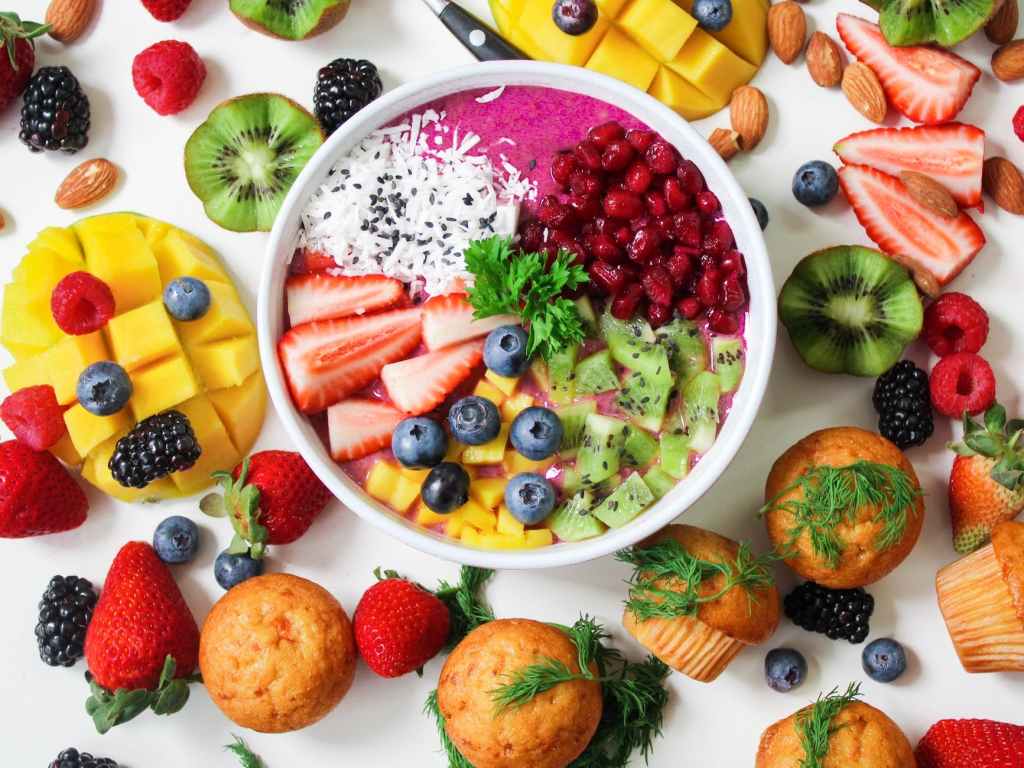
High cholesterol levels are always a problem. For those who want to take or control hyperlipidemia, many medications and supplements are out there, but what we eat is the most important and fundamental for treating and preventing dyslipidemia. Food intake lowers cholesterol levels in various ways. Let’s find out good foods promoting healthy life.
Red yeast rice
Since the 8th century, in the Tang Dynasty in China, red yeast rice began to be used to lower cholesterol. Red yeast produces monacolin-K, which is now known as lovastatin(MEVACOR), the medicine that lowers LDL-cholesterols in the blood. Monacolin-K is the principal active substance. The mechanism is through a competitive inhibition of the HMG-CoA reductase (HMGR), which is a key enzyme in the cholesterol synthesis. So, red yeast rice has exactly the same mechanism to lower cholesterol as lovastatin does. It is much easier to take red yeast rice than the drug because of its low content of pharmaceutial compound. Its metabolism in the liver is the same as lovastatin; watch out your liver. Taking red yeast rice with an anti-oxidant supplement might be a good option to prevent any liver damages. If you take any cholesterol-lowering medicines, red yeast rice will disturb your treatment, so ask your doctor and pharmacist before intake. Like most statin drugs, it might have side effects on the liver and muscles. In addition to lowering blood lipid levels, monacolin-K also prevents colon cancer, acute myeloid leukemia and neurological disorders such as Parkinson’s disease and type I neurofibromatosis (1).
Soybean
Clinical studies indicate that the consumption of soybean protein might reduce cholesterol and LDL levels preventing the development of atherosclerotic cardiovascular diseases (2). Consumption of soybean protein may reduce cholesterol and LDL levels. The main content of soy proteins are the 2 globulins, 7S or beta-conglycinin and 11S or glycinin. They are 90% of the total protein of the soybean. After absorption and transport to the liver, soybean protein could modulate the homeostasis of cholesterols. These proteins block LDL cholesterol production, leading to healthy blood conditions.
Phytosterols, plant-originated sterols and stanols, inhibit cholesterol absorption. A cup of soybean contains about 300 mg of phytosterols. Phytosterols are components of plant cell membranes. It functions like cholesterol in animal cells. Cholesterol and phytosterol’s structure are remarkably similar, and this makes that happen. There are sitosterol, campesterol, and stigmasterol, which the only structural differences are side chains.
Western consumes about 200-300 mg of phytosterols per day (3), and Asian and vegetarian diets consume more. Higher amounts (1~3 g/d) make a difference in decreasing LDL cholesterol. Meta-analysis have consistently shown that 1~3 g/d of phytosterol (or stanol) esters lowers plasma LDL cholesterol concentration up to 15% compared to placebo (4). Many explanations exist for the mechanisms of phytosterols; a possible reason is that phytosterol makes cholesterol soluble and easy to eliminate from the body.
Green tea
Catechins, a family of polyphenols, are powerful to deal with total cholesterol. There are many clinical trials on green tea. A Double-Blind, Randomized, Placebo-Controlled Study on green tea polyphenols. This study indicated that green tea polyphenol treatment could have potentially beneficial effects on LDL-cholesterol concentrations (4). Another study of green tea demonstrated a consistent trend of decreased total cholesterol, reaching 5.33%, and decreased LDL plasma levels (5). Dietary polyphenols have received much attention in the prevention of cardiovascular diseases due to their potential LDL-C lowering effects (6).
Fatty fish
Omega-3 in fish oil always gives us the right answers. Omega-3 does lots of things, including control triglyceride synthesis through inhibiting Diacylglycerol O-acyltransferase 2(DAGT2) and its metabolism through beta-oxidation. It especially reduces triglycerides in the blood, however, depending on the individual, omega-3 can lower triglycerides, but LDL can be higher. Increased LDL level by omega-3 does not affect blood vessels; no need to be concerned. And also omega-3 protects blood vessel and the heart with anti-inflammatory effects. Eating fish 2-3 times a week can manage blood cholesterol levels.
Whole grains
Fiber in oats, barley, and beans are rich. Soluble fiber helps to reduce the lipid absorption rate in the gut. They bind cholesterol and its precursors in the digestive system and drag them out of the body before they get into circulation (7). And they also make you feel full just after a meal. It is very helpful to los e weight.
Conclusion
Omega-3 supplements are easily accesible to lower triglyceride. But how about LDL-cholesterols? Foods in this article are mainly focused on improving LDL levels in the blood. Why don’t you try these healthy dietary to get good blood condition.
References
1) Zixiao Xiong 1, Xiaohua Cao 2, Qinyou Wen 3, Zhiting Chen 3, Zuxin Cheng 2, Xinying Huang 2, Yangxin Zhang 4, Chuannan Long 5, Yi Zhang 6, Zhiwei Huang 7. An overview of the bioactivity of monacolin K / lovastatin. Food Chem Toxicol. 2019 Sep:131:110585.
2) Miguel Rebollo-Hernanz 1, Neal A Bringe 2, Elvira Gonzalez de Mejia 1. Selected Soybean Varieties Regulate Hepatic LDL-Cholesterol Homeostasis Depending on Their Glycinin:β-Conglycinin Ratio. Antioxidants (Basel)
. 2022 Dec 22;12(1):20.
3) Valsta LM, Lemström A, Ovaskainen ML, Lampi AM, Toivo J, Korhonen T, Piironen V. Estimation of plant sterol and cholesterol intake in Finland: quality of new values and their effect on intake. Br J Nutr. 2004;92:671–678. doi: 10.1079/BJN20041234.
4) Chen I.-J., Liu C.-Y., Chiu J.-P., Hsu C.-H. Therapeutic effect of high-dose green tea extract on weight reduction: A randomized, double-blind, placebo-controlled clinical trial. Clin. Nutr. 2016;35:592–599.
5) Lee T.-M., Charng M.-J., Tseng C.-D., Lai L.-P. A Double-Blind, Randomized, Placebo-Controlled Study to Evaluate the Efficacy and Safety of STA-2 (Green Tea Polyphenols) in Patients with Chronic Stable Angina. Acta Cardiol. Sin. 2016;32:439–449.
6) Peng Sun,1 Liang Zhao,2 Nanhai Zhang,1 Jingxuan Zhou,1 Liebing Zhang,1 Wei Wu,3 Baoping Ji,1 and Feng Zhou1,* Bioactivity of Dietary Polyphenols: The Role in LDL-C Lowering. Foods. 2021 Nov; 10(11): 2666.
7) Elliot D. Jesch1 and Timothy P. Carr2. Food Ingredients That Inhibit Cholesterol Absorption. Prev Nutr Food Sci. 2017 Jun; 22(2): 67–80.
8) Harvard Health Publishing. 11 foods that lower cholesterol.
9) 고약사. 이걸 꾸준히 드시면, 고지혈증이 약 없이 사라집니다. (콜레스테롤 수치를 낮추는 검증된 영양제). 약사가 들려주는 약이야기

 쪼약 조수진
댓글 남기기